Turkish culture

Turkish culture

Discovering turkish culture!

Built on the ruins of the Ottoman Empire, Turkey is a Mediterranean country with a strong identity. Turkish culture is rich, and both religious and cultural traditions are ever-present...

1 - Anatolia

Turkish culture: heading to Anatolia

Turkish culture: heading to Anatolia

Close to Europe, Turkey unveils eastern treasures through its vibrant culture, traditions, and art. The population of Turkey currently reaches over 82 million people.
 
Around 90% of the population is Muslim, with Sunni Islam as the main religion in Turkey. The remaining population practices other faiths, including Sufism, Christianity, and Judaism.
 
Another fascinating aspect of religion in Turkey: Alevis represent around 15 million people yet remain considered a heretical religious minority by others. They embrace a different form of Islam, less rooted in practice, less dogmatic, and closer to Shia Islam.
 
The Turkish language stands as the main language in Turkey: it belongs to the country's cultural heritage. 87% of the population learns and speaks it. French remains widely taught, alongside English. Conversing in either language proves quite common in Turkey's major cities.

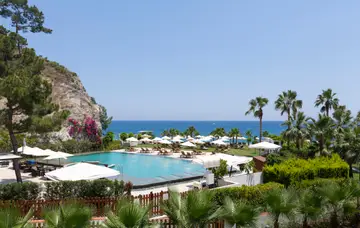
Discover turkish culture with our all-inclusive stays

See all holidays >

2 - Festivals and arts

Festivals and arts in Turkey

Festivals and arts in Turkey

Turkish culture celebrates Muslim religious festivals, events honoring foundational historical moments, and traditional seasonal gatherings. Together, they reflect a Turkish culture of celebration.

Ramadan stands as one of Turkey's greatest cultural traditions. This resonates deeply, as Islam is the country's predominant religion. During this fasting month, each evening, practitioners await the signal to begin celebrations that unfold late into the night -in restaurants, hotels, and streets. Villages and cities across the country align rhythmically with sunrises and sunsets, embracing new festive rhythms.

Traveling through Turkey invites you to discover the vibrant Turkish arts that enrich its cultural tapestry. Folk dances, for instance, and notably ballet, were institutionalized during the Republican era. Turkish classical music ("Türk Sanat Müziği") also captivates... equally folk-inspired: it resonates through the tambur, ney, and kanun.

Turkish shadow theater, born with Hacivat and Karagöz, remains a cultural reference. As does cinema, celebrated at film festivals like the Antalya Film Festival or the Istanbul International Film Festival.

Festivals in Turkey
About ten other festivals are celebrated throughout Turkey, each tied to a historical or religious milestone. Among them: Independence and Childhood Day, Youth and Sports Day, Victory Day, Republic Day, Seker Bayram marking Ramadan's end, and Kurban Bayram, which, like Ramadan, follows the lunar calendar.

3 - Traditions and religion

Customs and traditions rooted in religion

The 'whirling dervishes' are an integral part of turkish folklore and culture. These Muslim religious figures live in seclusion in tekke (monasteries) and some remain active today. They are known for their poetic ceremonies, both spectacular and enchanting. Dance becomes their way to connect with the divine.

Religious festivals, like those mentioned earlier, hold deep meaning, and many practices centre around Islam. This gives Turkey a rich blend of Arab, Muslim, and naturally, Turkish heritage.
Turkish culture embraces arts, sports, festivals, and timeless traditions. Immersing yourself in this culture means stepping into a history spanning thousands of years, shaped by civilizations, peoples, and profound social evolution.

Did you know? Tea (çay) is Turkey's national drink! Grown locally, steeped slowly, and often sweetened, it flows through daily life and welcomes every guest with warmth.

More about Club Med

Your favorite resorts